Russia
Russian military to get 30 new ICBMs, 3 nuclear subs in 2010
Topic: Medvedev's state-of-the-nation address - 2009

Russian military to get 30 new ICBMs, 3 nuclear subs in 2010
© RIA Novosti. Vitaliy AnkovRelated News
Russian nuclear sub starts sea trials after overhaul
Nuclear sub Nerpa to enter service in December
Russia to dismantle 191 nuclear submarines by late 2010
Russia sends another strategic nuclear submarine for scrapping
Multimedia
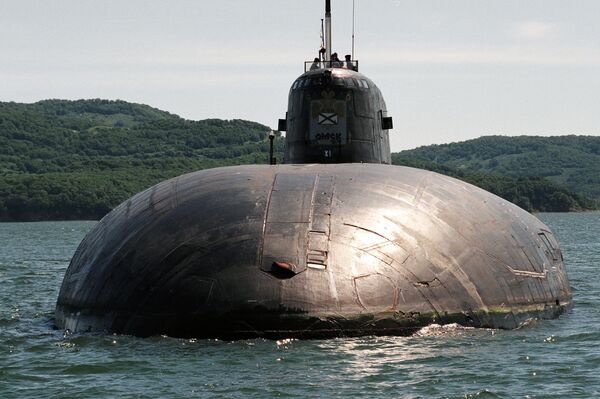
MOSCOW, November 12 (RIA Novosti) - Russia's Armed Forces are to receive 30 new ground and sea-launched ballistic missiles, three nuclear submarines, and an assortment of other weapons, the Russian president said on Thursday.
Dmitry Medvedev said the list would also include "five Iskander [tactical] missile complexes, about 300 modern armored vehicles, 30 helicopters, 28 warplanes, one corvette-class warship, and 11 spacecraft."
In his state-of-the-nation address to parliament, Medvedev stressed provision of advanced weapon systems to the military was a priority.
"There is no room for debate here: These weapons simply must be procured," he said.
He instructed the government to put in place an effective contract system to strike the right balance between arms manufactured for export and for domestic needs.


Add to blog
You may place this material on your blog by copying the link.
Publication code:
Preview:

Send by e-mail
Leave a comment
- arnoldvinette@yahoo.comNothing makes a military commander happier02:41, 02/10/2010Than getting some new toys to play with.
Great photo of the new Russian sub.
Honestly RIA Novosti is much better than any western online news site.
We never get cool new images of jet fighters, helicopters, or submarines.
One can never have too many submarines for arctic patrols and worldwide penetration and reconnaissance missions.
On the serious side though, countries must always be on the alert and on the defensive probing each others defensive and attack capabilities.
A friend today could be your enemy tomorrow.
How so?
I just learned today that at the beginning of World War II, Russia and Nazi Germany were allies. Together they secretly joined forces, split up Poland, then invaded Poland and split it up. This was the beginning of World War II. The two countries signed a non-aggression pact for 10 years. It only lasted a short time. Early this year I had defended Russia against a Canadian political attack due to information I had learned at the war memorial in Volgograd.
Between 1942 and 1944 Nazi Germany had attacked and invaded Russia with all its military might and tactics and tried to take it over. So here you have a perfect case of your new best friend in crime becoming your ultimate enemy. I will have to finish watching this documentary to find out how Russia and Germany became such adversaries that would claim millions of Russian and enemy lives.
So it is wise for countries to always probe each others borders, determining strengths and weaknesses. One will never know when this knowledge will determine the success or failure of a future battle.
Country borders are very fluid and they are only maintained by defending them.
If your country is weak militarily and rich in natural resources, it is very unlikely that it will be your country for very long.
History teaches this lesson over and over and over again.
Arnold Vinette
Arnold Vinette is actively involved in promoting positive relations between Russia, Canada and the United States using the artwork and short stories from the kids in their respective countries. A recent proposal sent to Canadian Foreign Minister Lawrence Cannon has now been forwarded to the Minister of CIDA (Canadian International Development Agency ) Beverley J. Oda for for approval and funding of a $100 million project that will process 5 million pieces of student artwork from Russia for a series of "Russian Kids Art Album eBooks" creating 1,025 jobs in Ottawa / Gatineau Canada. The goal to promote better understanding of modern Russia, its people, culture, traditions and modern lifestyle. If successful the project will involve Russian Foreign Minister Sergei Lavrov, Russian International Development Agency, eventually gaining support from President Dmitry Medvedev and Russian Prime Minister Vladimir Putin.
Most read
Top multimedia

Image Galleries: The Igor Moiseyev Ensemble: Keepers of the Dance

Video: Rudolph Abel’s liberation. Interview with KGB Gen. Yuri Drozdov

Infographics: Password generator

Cartoons: Nothing to Catch Here