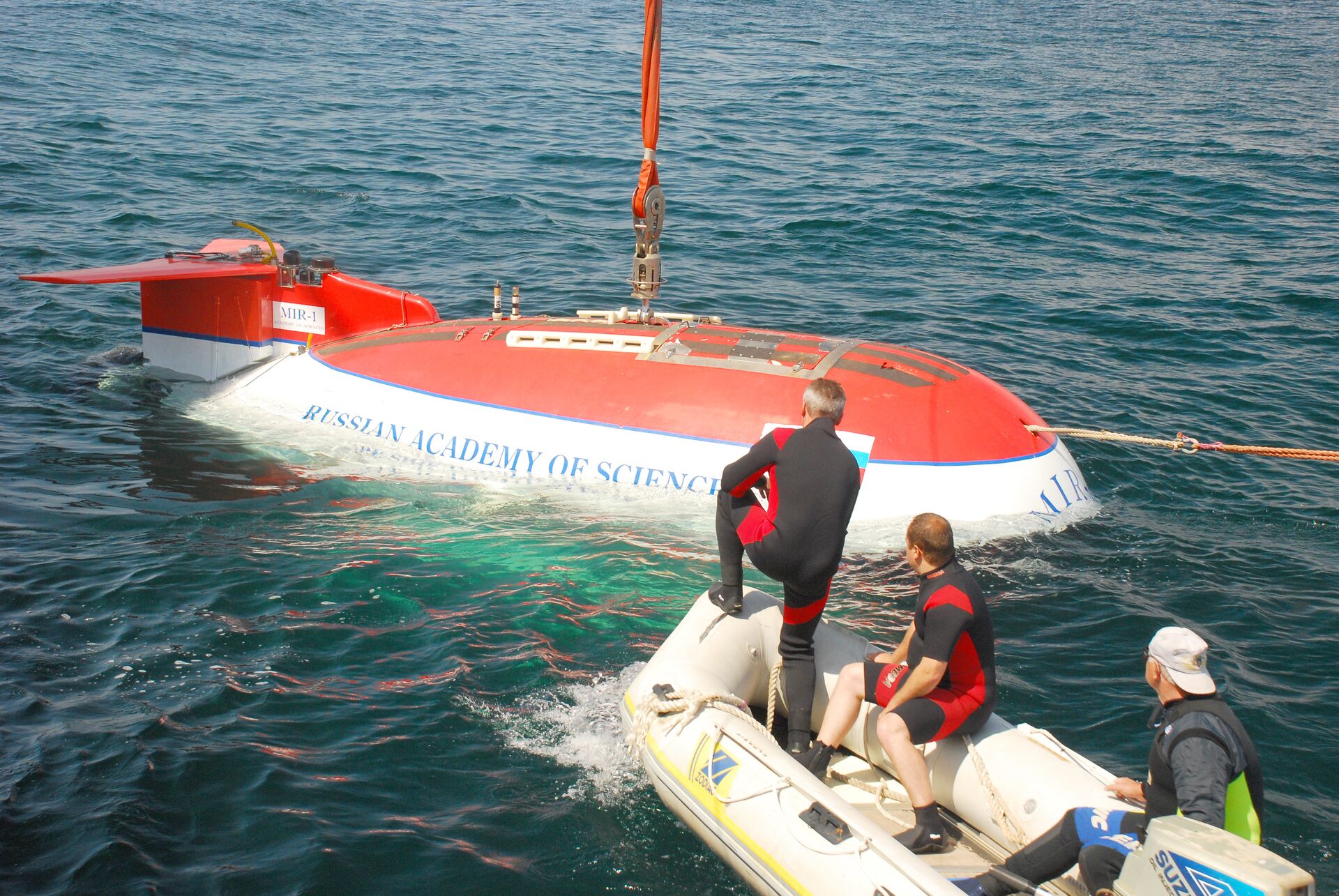
Russia's Mir-1 and Mir-2 self-propelled deep submersibles on Tuesday will conduct the second stage of exploring gas hydrates located at the bottom of Lake Baikal, a representative of the Fund for the Protection of Lake Baikal said.
Gas hydrates are crystal-based solids which physically resemble ice. Scientists call them "the fuel material of the future" because they have a higher concentration of hydrocarbons and are considered to be a possible alternative to oil and gas.
"The submersibles will dive near the St. Petersburg underwater mud volcano; the area surrounding it is rich with gas hydrate fields," the representative said.
The underwater expedition of Lake Baikal started in 2008. This summer, researchers searched for new species of flora and fauna, and dove down more than a mile (1.6 kilometers) to the deepest point of the lake, near Olkhon Island.
The mini-subs worked in the southern part of the lake, and in August 2009 the expedition moved to Baikal's north, where gas hydrates, crystalline solids, and large amounts of methane are trapped within a cage of water molecules, were found.
"The last year, scientists were not able to complete all of their research on the unique solids," the representative said.
The total cost of the expedition is $8 million, with one dive worth 2 million rubles ($64,800).
Russian Prime Minister Vladimir Putin made a 4-hour dive in the Mir-1 mini-submarine to the bottom of Lake Baikal in August last year.
IRKUTSK, July 12 (RIA Novosti)