Science
Russian, U.S. scientists set to study methane release in Arctic

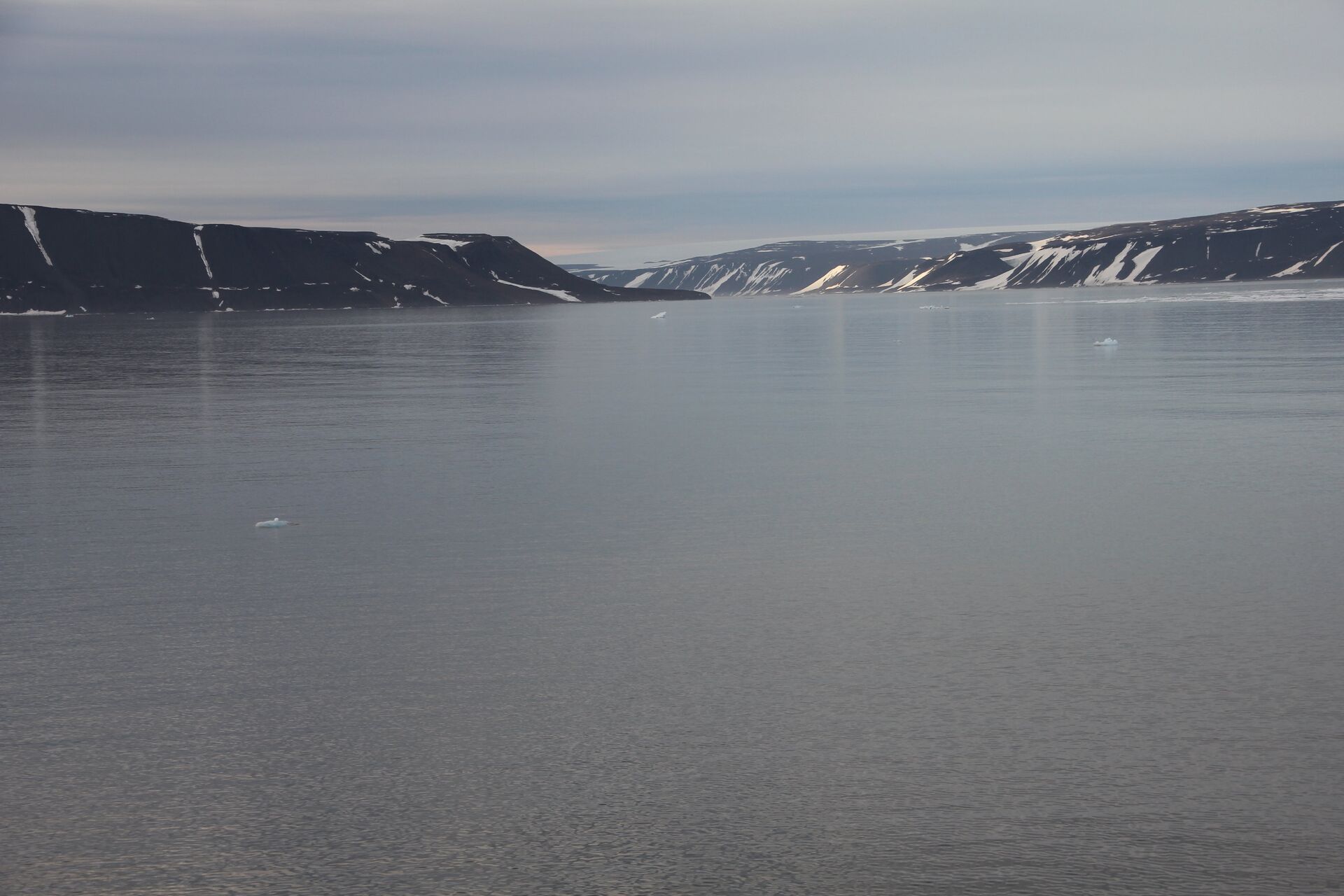
The 45-day expedition will focus on the sea shelf of the Laptev Sea, the East Siberian Sea and the Russian part of the Chukotsk Sea, where 90% of underwater permafrost is located.
© RIA Novosti. Valery YarmolenkoVLADIVOSTOK, September 2 (RIA Novosti)
Related News
Denmark, Greenland and Faroe Islands agree on Arctic strategy
Geographers to discuss Arctic Sea Route at second Arctic Forum
Russia's Arctic force may include paratroopers - general
Russian research vessel begins Arctic shelf research
Multimedia
A group of Russian and U.S. scientists will leave the port of Vladivostok on Friday on board a Russian research ship to study methane emissions in the eastern part of the Arctic.
"This expedition was organized on a short notice by the Russian Fund of Fundamental Research and the U.S. National Science Foundation following the discovery of a dramatic increase in the leakage of methane gas from the seabed in the eastern part of the Arctic, said Professor Igor Semiletov, the head of the expedition.
The group consists of 27 scientists who would attempt to measure the scale of methane emissions and clarify the nature of the process.
The 45-day expedition will focus on the sea shelf of the Laptev Sea, the East Siberian Sea and the Russian part of the Chukotsk Sea, where 90% of underwater permafrost is located.
"We assume that the leakage of methane results from the degradation of underwater permafrost...A massive release of such a powerful greenhouse gas may accelerate global warming," Semiletov said.
Methane is about 20 times more potent than CO2 in trapping solar heat.
Professor Semiletov has been studying methane seepage in the region for the last 15 years, and leads the International Siberian Shelf Study (ISSS), which has launched a number of expeditions to the Arctic Ocean.
"The studies are reaching a more serious level. Many Russian and U.S. universities have joined the [ISSS] program bringing in the most advanced equipment which will allow us to study the structure of underwater permafrost with more precision," Semiletov said.


Add to blog
You may place this material on your blog by copying the link.
Publication code:
Preview:

Send by e-mail
Leave a comment
- ffffNew clean very cheap energy technology: LENR Ni-H14:15, 05/09/2011There is a new clean energy technology that is 1/10th the cost of any other energy technology. Don’t believe me? Watch this video by a Nobel prize winner in physics: http://pesn.com/2011/06/23/9501856_Nobel_laureate_touts_E-Cat_cold_fusion/
Still don’t believe me? It convinced the Swedish Skeptics Society: http://www.nyteknik.se/nyheter/energi_miljo/energi/article3144827.ece
LENR using nickel. Incredibly: Ni+H+K2CO3(heated under pressure)=Cu+lots of heat. Here is a detailed description of the device and formula from a US government contract: www.lenr-canr.org/acrobat/GernertNnascenthyd.pdf
Still don’t believe me? A major US corporation has bought the rights to sell the 1 megawatt Rossi E-Cat, and it will be announced late October in the US, with the unit hitting the market in November. How can any fossil fuel compete with such cheap energy (and clean to boot!).
By the way, here is a current survey of all the companies that are bringing LENR to commercialization: http://www.cleantechblog.com/2011/08/the-new-breed-of-energy-catalyzers-ready-for-commercialization.html
Most read
Top multimedia

Image Galleries: The World’s Most Notorious Prisons

Video: Le Bourget Air Show: Yak-130 Demonstration Flight and Tour of New SSJ-100 Jet

Infographics: Group of Eight: Countries and Permanent Members

Cartoons: Polar Explorer Day