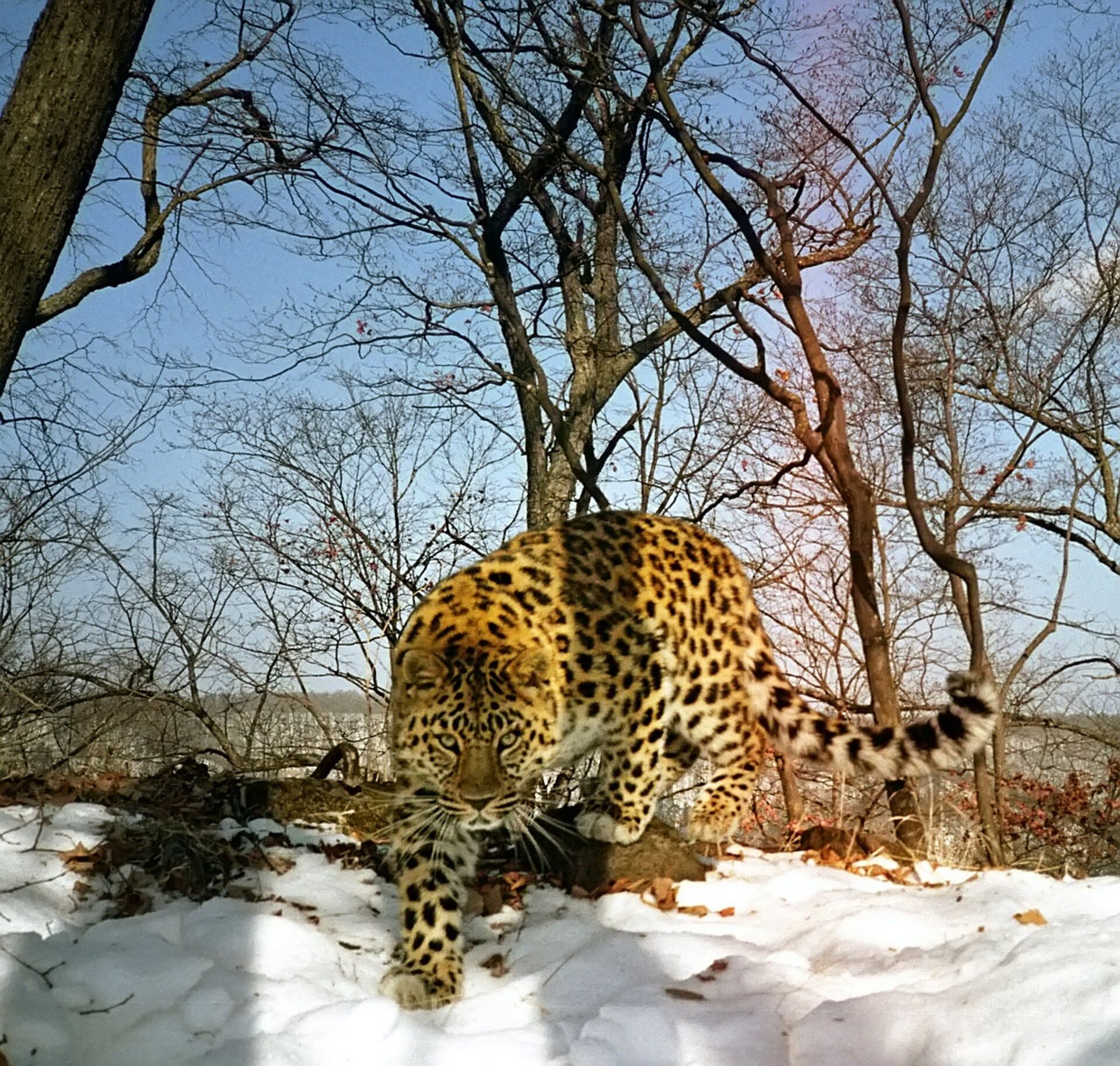
A team of Russian conservation experts have launched a probe into the death of a rare Amur leopard, one of only an estimated 40 left in the wild, in a natural reserve in the country’s Primorye Territory, a spokesman for the Russian Academy of Sciences’ wildlife study project said on Thursday.
The remains of the leopard, called Uzor (Pattern) by conservation specialists, have been found in the Leopardovy natural reserve in southern Primorye, the spokesman said, without elaborating on the date of the discovery.
Poaching is believed to be the most likely cause of the leopard’s death, although the experts also study other possible causes such as starvation and a fatal fight with another predator, the spokesman said.
The leopard was fitted with a satellite-tracking collar in September 2011 as part of the Academy of Sciences’ project designed to uncover the secrets of one of the world's most endangered and elusive animals.
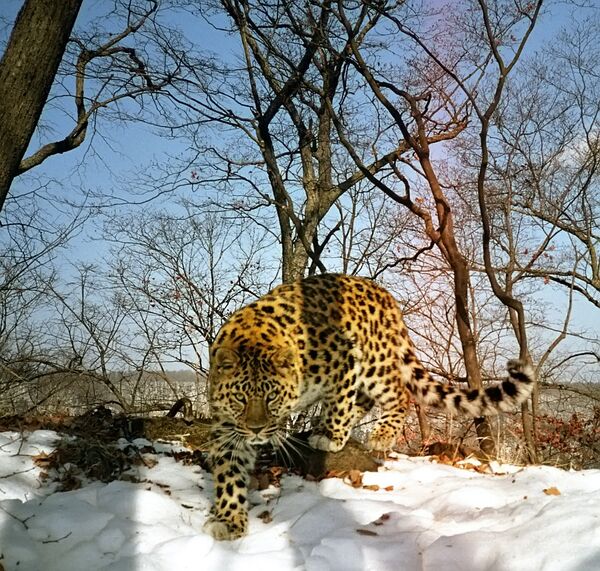
Camera-trap photos of Uzor made in November last year showed the animal fit and active, the spokesman added.
The Amur leopard, also known as the Manchurian, or Far Eastern leopard, is one of the rarest large cats in the world. The International Union for the Conservation of Nature has included the Amur leopard in its list of critically endangered animals in the Red Book.
Fewer than 40 leopards are left in the southern part of the Russian Far East, the species' only habitat in the country.