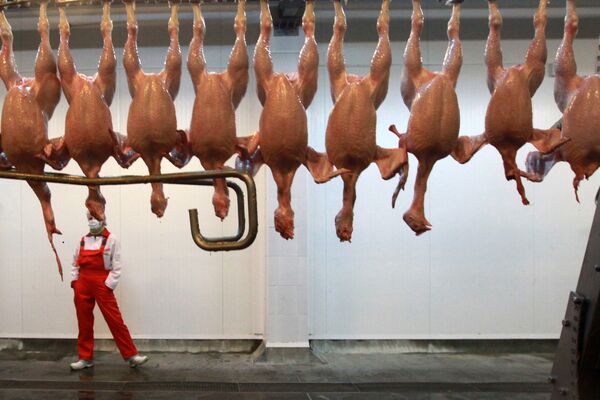
China has imposed antidumping measures on U.S. poultry imports, the country's trade ministry said on Friday.
"An investigation showed U.S. suppliers dump prices on their production, which causes harm to local producers," the ministry said in a statement.
Starting from February 13, U.S. poultry suppliers will have to pay a tax, intended to cover the difference in domestically produced and imported poultry prices.
In the first half of 2009, some 407 tonnes of poultry were imported to China. U.S. supplied 90% of poultry consumed in China.
The Chinese authorities started the antidumping investigation of U.S. poultry imports in September 2009.
Russia banned imports of U.S. chlorine-treated poultry as of January 1, citing new safety requirements. Washington, which supplied 22% of poultry consumed in Russia last year, says the move will damage American poultry industry and push prices up for Russian consumers.
Russian Foreign Minister Sergei Lavrov said in late January that "technologically, American poultry producers are prepared to observe the [new Russian] standards" which correspond to European rules.
BEIJING, February 5 (RIA Novosti)