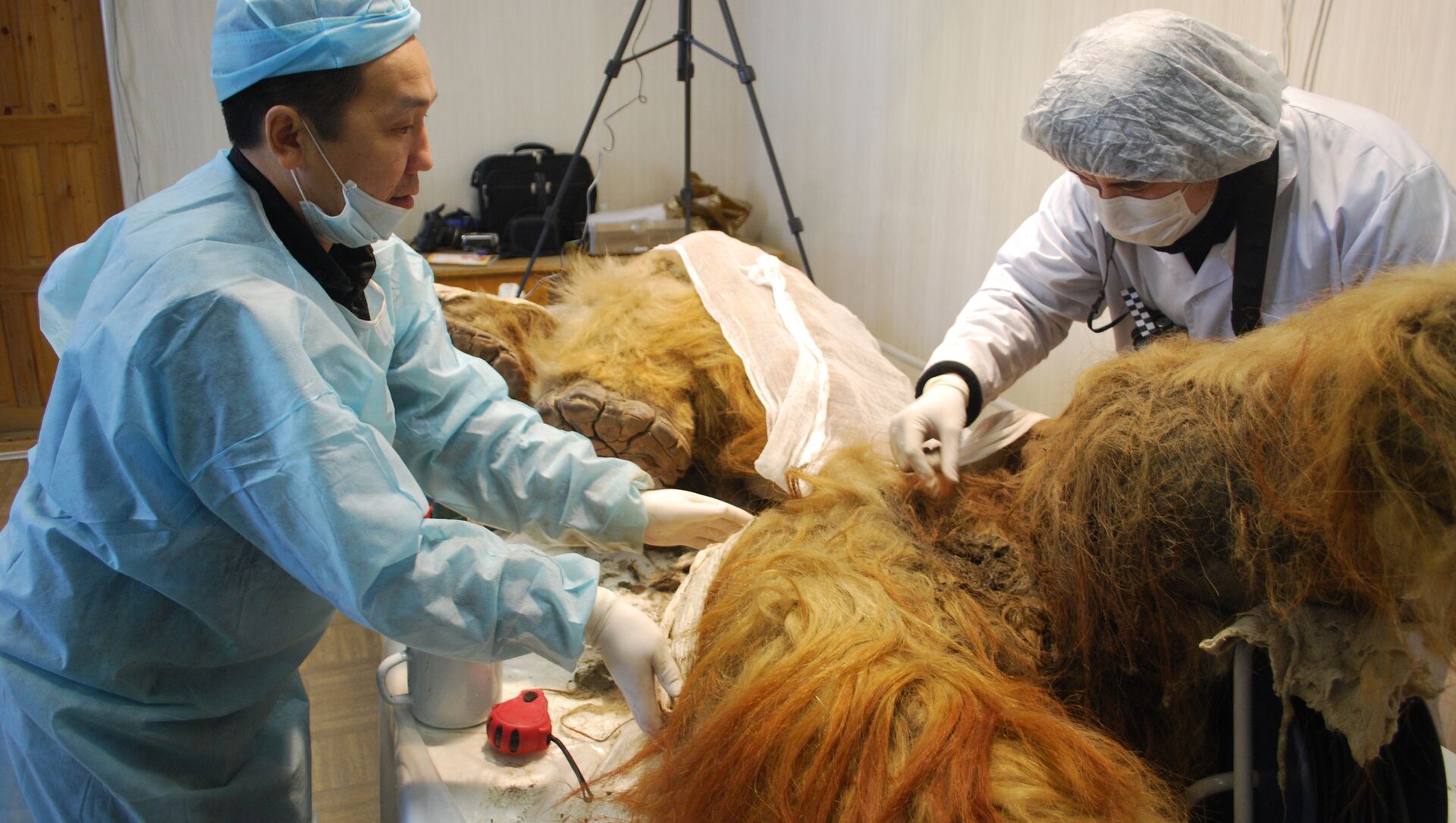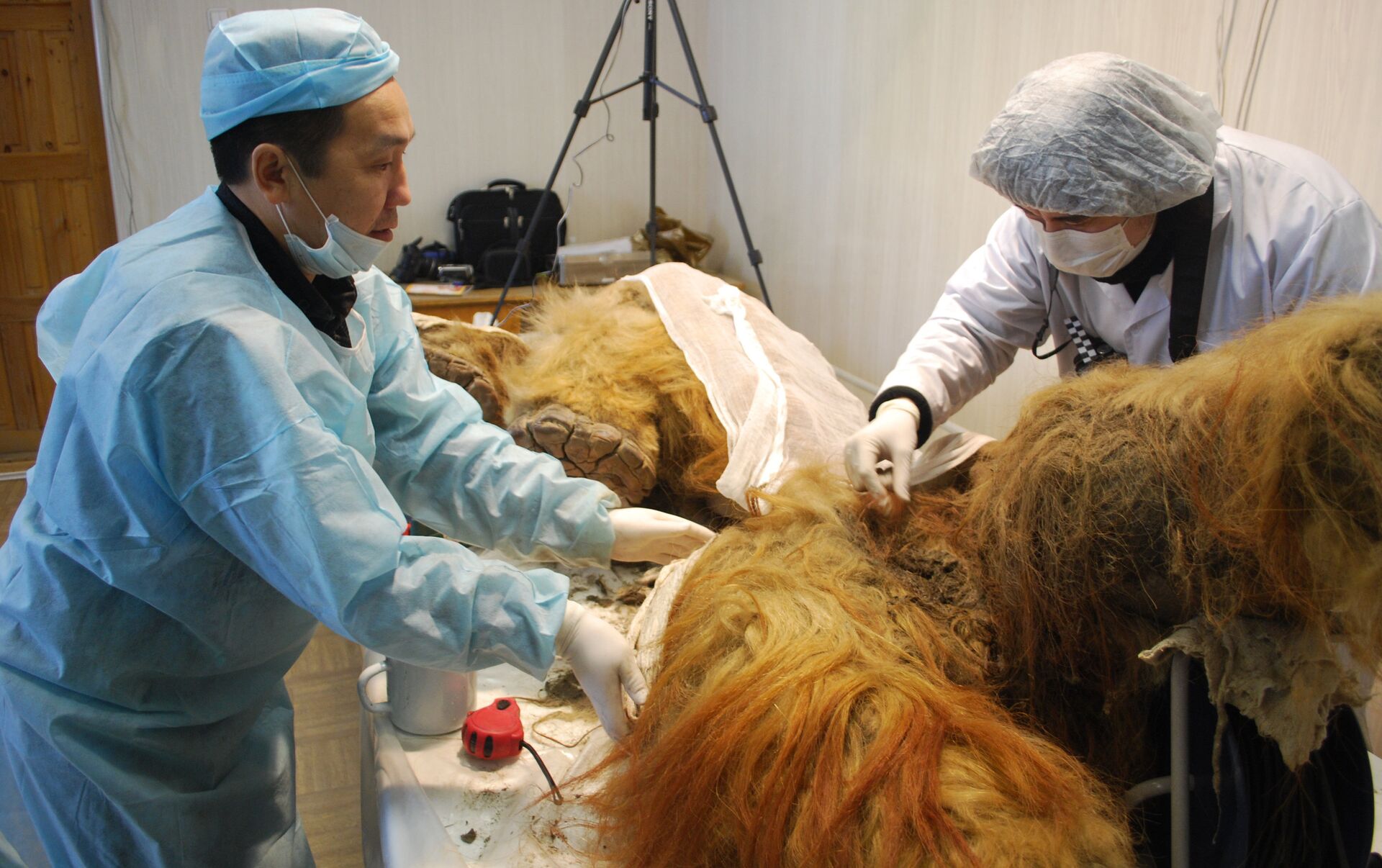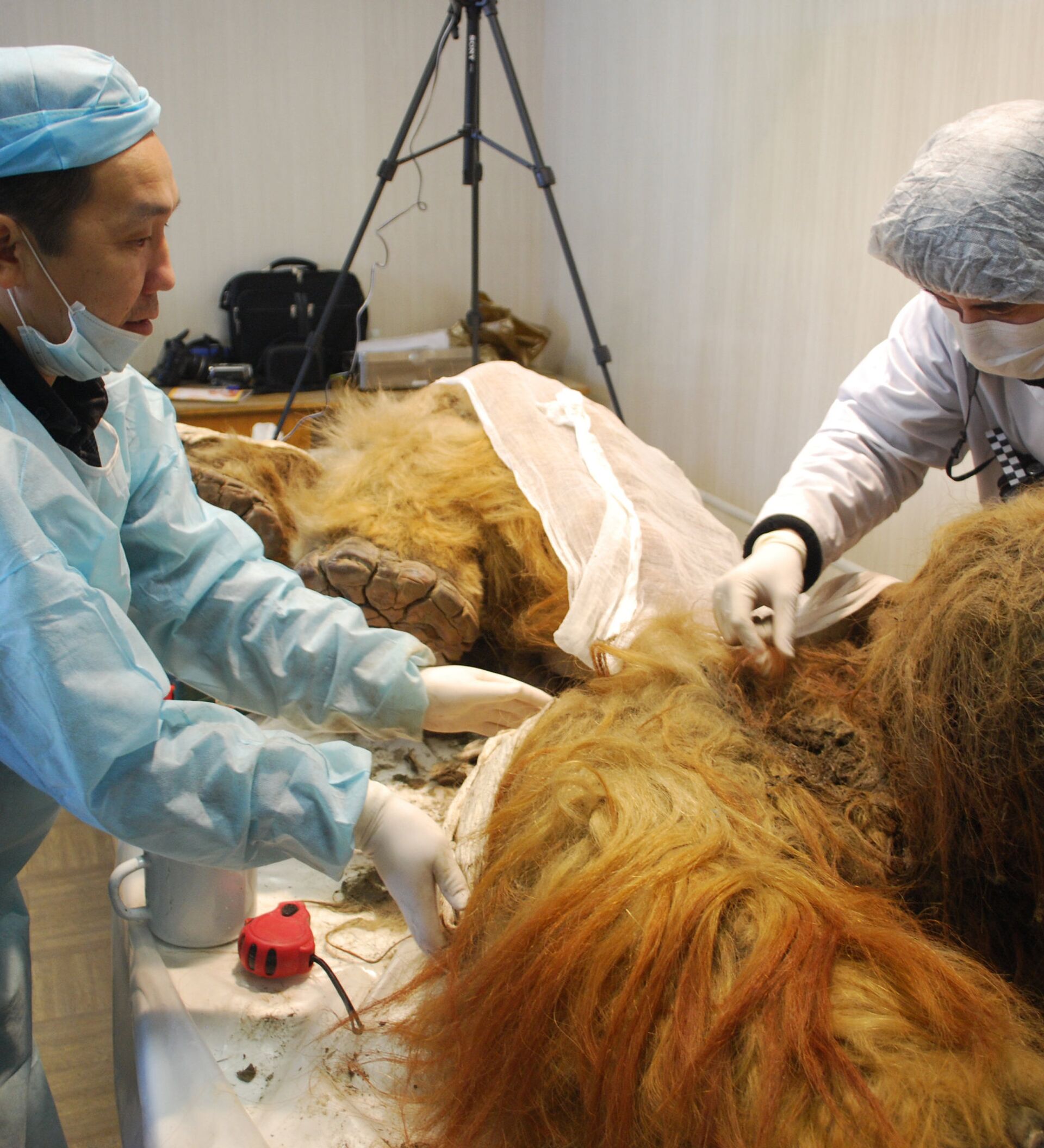
YAKUTSK, February 26 (RIA Novosti) – Russian scientists have started potentially groundbreaking work to study a well-preserved mammoth brain, in the hope of understanding more about the extinct animal’s behavior, Albert Protopopov from Yakutia’s Academy of Sciences has told RIA Novosti.
“This discovery holds great scientific significance. This is the first time scientists have gotten their hands on the brain of an animal that lived tens of thousands of years ago, and one that’s in such good condition” Protopopov said.
The baby mammoth, nicknamed Yuka, was found in 2010 in Yakutia. It is believed to have lived around 39,000 years ago, and is thought to have been around 10 or 11 years old at the time of death. Scientists say the brain is in excellent condition.
“This allows us to study not only the morphological features of the mammoth brain, but also, most importantly, to understand particular aspects of their behavior, something that has not been possible to date,” Protopopov said.
Other mammoth finds have not produced such well-preserved carcasses. Research work on this mammoth brain will be carried out in Moscow. While the carcass “is exceptionally well preserved, the skin shows marks made by claws and teeth of cave lions, and tear marks from stone tools used by early humans.”